
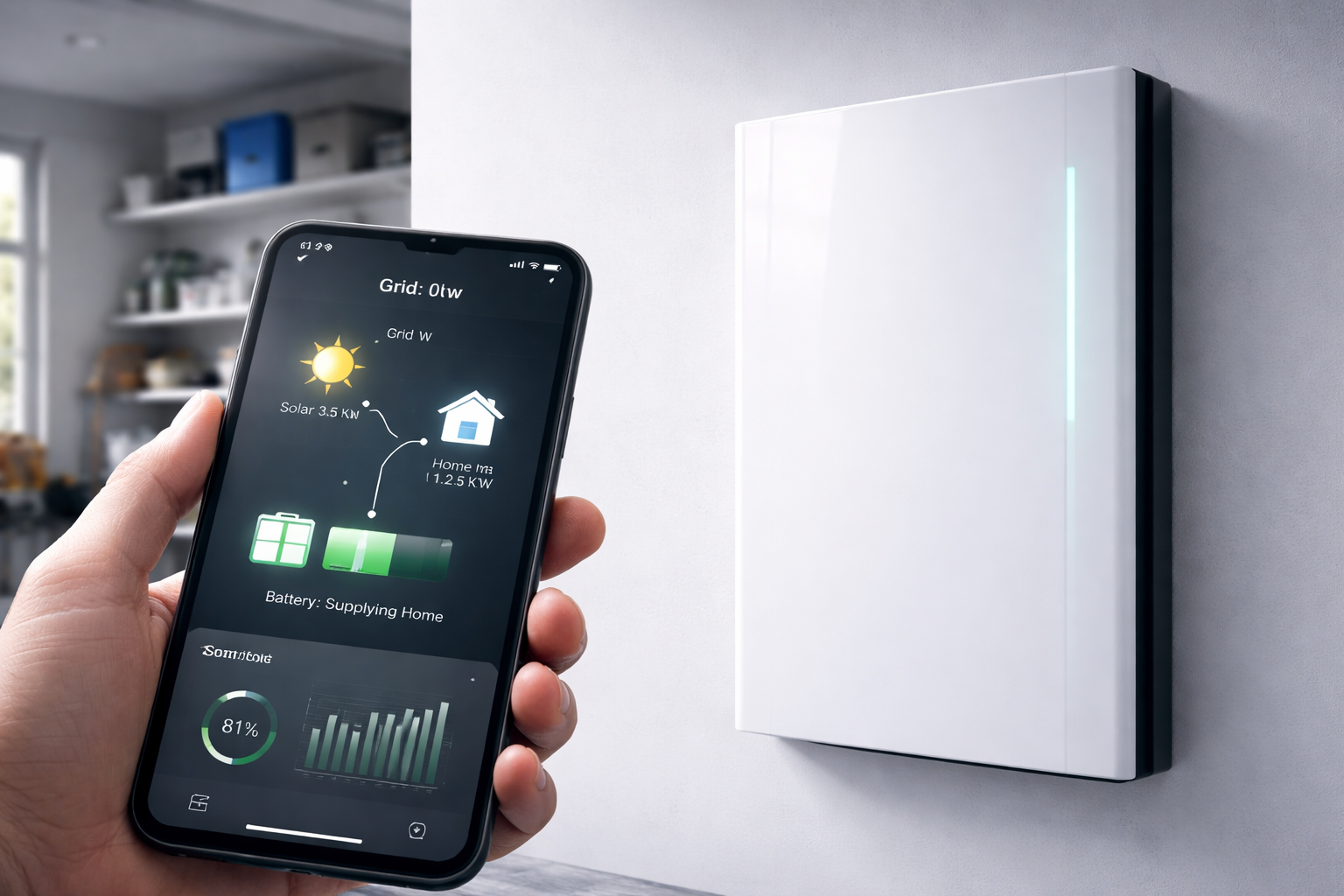
Achieving significant home battery energy savings is the ultimate defensive maneuver for the 2026 “Prosumer”—the homeowner who doesn’t just consume energy, but actively manages and produces it. As utility companies across the US continue to grapple with aging infrastructure and extreme weather events, the residential sector is seeing a massive shift toward decentralized storage. If you are tired of being a captive customer to a fragile and expensive grid, a home battery system is your ticket to energy independence and financial resilience.
Modern home battery energy savings are no longer just for those with solar panels. With the rise of dynamic electricity pricing, these units serve as high-performance financial assets that allow you to “buy low and sell high” within the energy market. By strategically discharging your stored power when rates are at their peak, you can effectively “Slash The Grid” and turn your utility meter into a liability for the power company, rather than a monthly bill for you.
This strategy is the perfect complement to our guide on how to save money on peak electricity hours using load shifting.
The Energy Arbitrage Play: Buying Low to Maximize Home Battery Energy Savings
Most homeowners assume a battery is only useful during a blackout. In the “Slash The Grid” playbook, that’s just a secondary benefit. The real money is in Energy Arbitrage. This is the practice of charging your battery during “Super Off-Peak” hours (usually between 12:00 AM and 5:00 AM) when electricity is at its absolute cheapest, and then using that stored energy to power your home during “Peak” hours when the utility company tries to triple your rate.
You don’t need a single solar panel to capture these home battery energy savings. In states like California or Massachusetts, the spread between off-peak and peak rates can be as much as $0.30 per kWh. By shifting 10 kWh of usage from your battery daily, you are generating a “risk-free” return of $3.00 per day, or over $1,000 per year, simply by outsmarting the rate schedule. When choosing a system for arbitrage, focus on Round-trip efficiency—the percentage of electricity that is recovered from the battery after being stored. High-end lithium-iron-phosphate (LFP) batteries in 2026 typically boast a round-trip efficiency of 90% or higher, ensuring minimal waste during the conversion process.
Maximizing Home Battery Energy Savings During Peak Hours
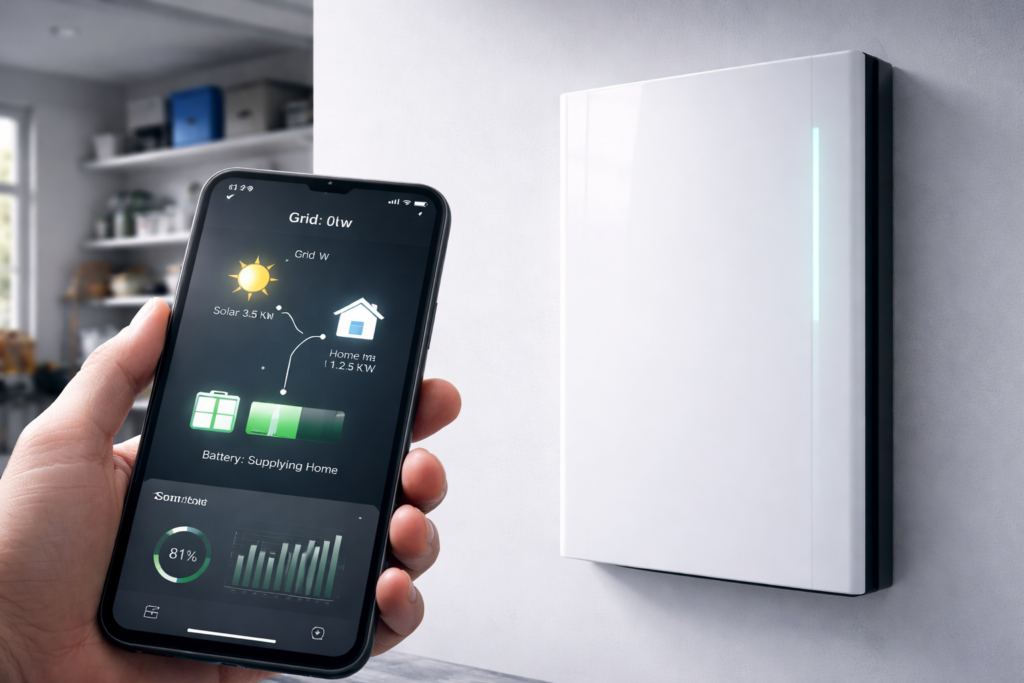
To truly optimize your home battery energy savings, your system must be integrated with a Time-of-Use (TOU) rate plan. Most utilities now offer these “punitive” schedules that punish you for running appliances in the evening. By automating your battery to take over the entire household load at 4:00 PM, you effectively disappear from the grid’s perspective during their most profitable window. This “Peak Shaving” technique ensures that you never pay the $0.50/kWh surge prices that are becoming common in 2026.
Furthermore, when your battery is paired with high-drain devices, the savings compound. If you are leveraging home battery energy savings to run your climate control system, the ROI on your investment accelerates. By discharging the battery to handle the startup surge of an HVAC unit, you avoid “Demand Charges” that some utilities are beginning to pilot for residential customers. This is the definition of grid resilience: your house stays comfortable while your neighbors are forced to turn their thermostats to 78 degrees to avoid bankruptcy.
Check out our deep dive on heat pump energy savings to see how to pair efficient heating with battery backup.
Top 3 Home Battery Systems in 2026: ROI vs. Capacity
Not all storage is created equal. To get the most home battery energy savings, you need to match the battery chemistry and inverter capacity to your specific “Critical Load” profile. Here are the three market leaders dominating the 2026 landscape:
- Tesla Powerwall 3: The all-in-one king. With an integrated solar inverter and 13.5 kWh of LFP storage, it offers the most seamless “Energy Arbitrage” software in the industry. Its high Depth of Discharge (DoD) of 100% means you can use every bit of energy you pay to store.
- Enphase IQ Battery 5P: The modular choice. For homeowners who want to start small and scale up, Enphase offers high power output (3.84 kW continuous) which is critical for starting heavy loads like well pumps or air conditioners. This modularity ensures you don’t overspend on capacity you don’t need.
- EcoFlow Delta Pro Ultra: The portable-stationary hybrid. This system is perfect for the “resilience-focused” prosumer. It can be hardwired into your home but remains portable for emergency use. It is a high-ROI entry point for those wanting home battery energy savings without a $15,000 permanent installation cost.
Virtual Power Plants (VPPs): Getting Paid for Home Battery Energy Savings
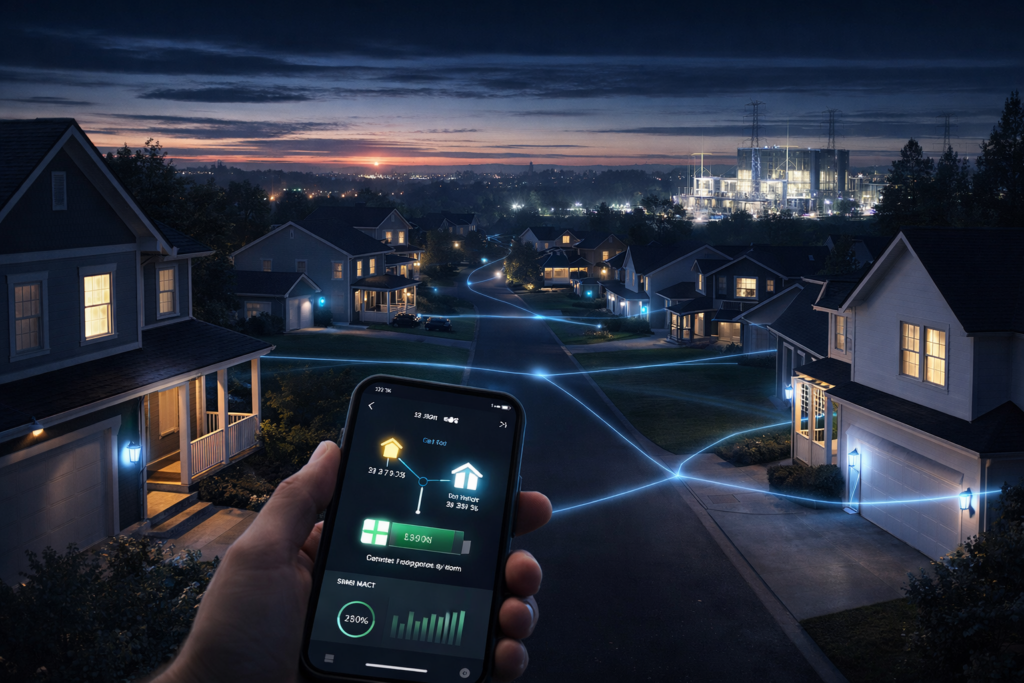
In 2026, the grid is no longer a one-way street. Forward-thinking utilities are now treating residential batteries as a distributed resource. By enrolling in a Virtual Power Plant (VPP) program, you can monetize your home battery energy savings even further. Programs like Tesla’s “Connected Solutions” or Enphase’s “Grid Services” allow the utility to “borrow” a small percentage of your stored energy during grid emergencies to prevent blackouts.
In exchange, you are paid a premium rate—often $1.00 or more per kWh—for the electricity you provide. This turns your battery from a “savings device” into a “revenue generator.” Homeowners in the Northeast are seeing annual VPP payments between $300 and $700, drastically shortening the payback period of the hardware. You are effectively acting as a micro-utility, providing stability to the community while being compensated for your resilience. Detailed studies by the National Renewable Energy Laboratory (NREL) suggest that distributed storage is the only way to avoid multi-billion dollar grid upgrades, making these VPP payments a permanent fixture of the 2026 economy.
The 30% Federal Tax Credit: Accelerating Your ROI
One of the biggest misconceptions in 2026 is that you need solar to get the federal tax credit. Thanks to recent legislative updates, stand-alone battery storage (5 kWh or larger) is fully eligible for the 30% Residential Clean Energy Credit (Section 25D). This means if you spend $10,000 on a battery and installation, the IRS gives you a $3,000 credit against your tax liability. This massive subsidy is the primary driver of home battery energy savings for the average US household.
When combined with local utility rebates—which can sometimes offer an additional $500 to $2,000—the net cost of the system drops into “no-brainer” territory. Major manufacturers like Tesla or Enphase often provide tools to calculate these specific local incentives. If you are planning for energy independence, 2026 is the “Golden Hour” to lock in these credits before they begin to sunset in the late 2020s.
The Payback Period: Home Battery Energy Savings Comparison
| Battery Model | Capacity (kWh) | Estimated Installed Cost* | Payback Period (Years) |
|---|---|---|---|
| Tesla Powerwall 3 | 13.5 kWh | $9,500 – $12,500 | 7 – 9 Years |
| Enphase IQ 5P (x3) | 15.0 kWh | $11,000 – $14,000 | 8 – 10 Years |
| EcoFlow Delta Pro Ultra | 6.0 kWh | $5,500 – $7,000 | 5 – 7 Years |
*Cost estimates are after the 30% Federal Tax Credit. Savings assume high-intensity TOU arbitrage and VPP participation.
STG Pro Tip: The “Critical Load” Audit
Do not try to back up your whole house unless you have an unlimited budget. To maximize your home battery energy savings, identify your “Critical Loads”—refrigerator, Wi-Fi router, a few LED light circuits, and your well pump (if applicable). By only backing up these essentials, you can buy a smaller, cheaper battery (like 5-10 kWh) that still delivers 100% of the peace of mind during a blackout while maximizing your daily arbitrage ROI.

Securing Your Future Energy Independence
Investing in home battery energy savings is a bet on yourself and a hedge against a failing grid. Whether you are chasing the high ROI of energy arbitrage or the “priceless” value of security during a 48-hour winter storm, a battery is the missing piece of your home’s financial ecosystem. As we move further into 2026, the gap between those who “Slash The Grid” and those who are “Slaved to the Grid” will only widen. It’s time to take your power back.
If the grid went down for 48 hours, what is the one appliance you couldn’t live without? Let us know in the comments below, and we’ll help you calculate how much battery capacity you’d need to keep it running!