
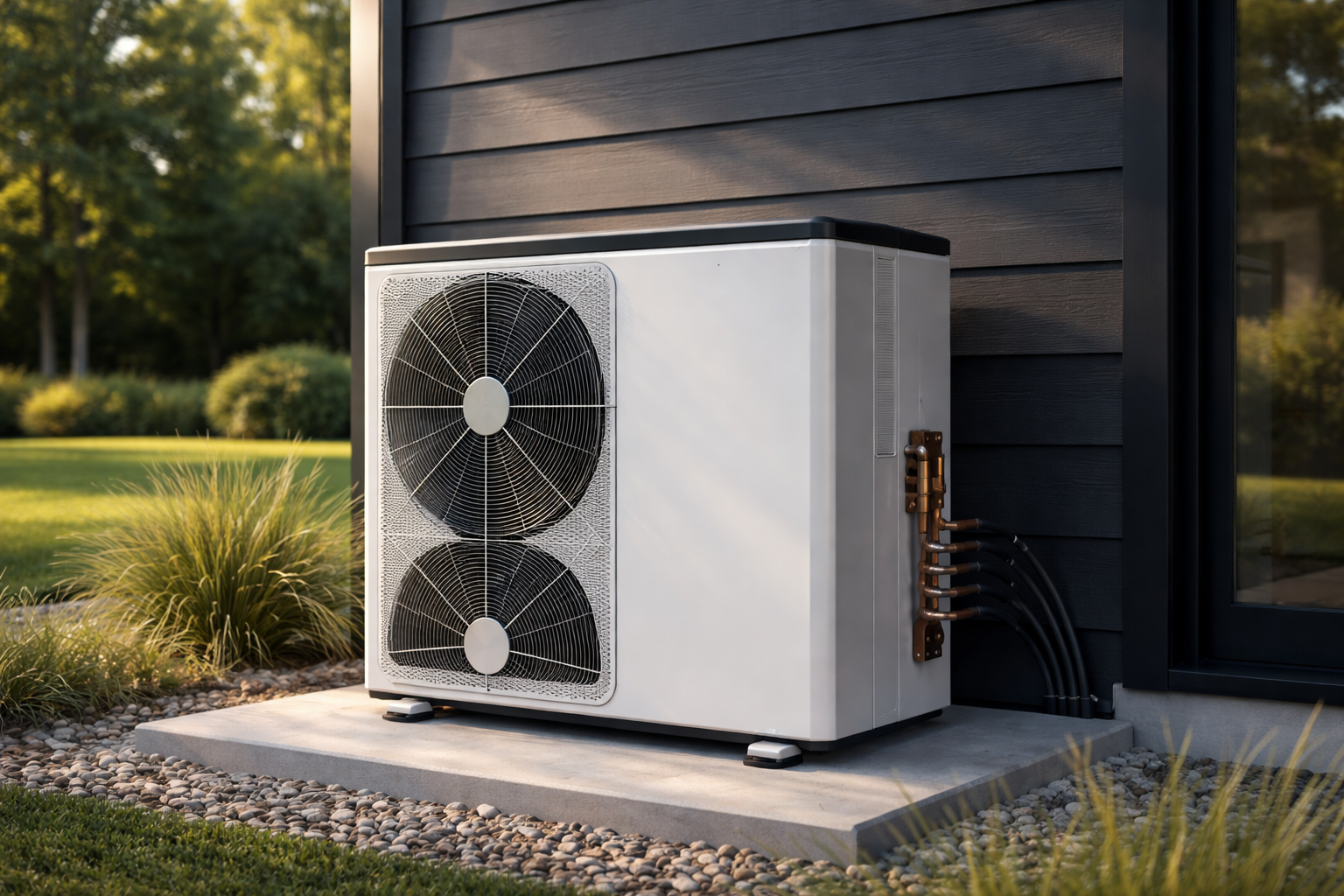
Stop burning fossil fuels to keep your living room at 70 degrees. In 2026, relying on a traditional gas furnace or an aging central AC unit is becoming a massive financial liability. Achieving maximum heat pump energy savings is the single most effective way for a US homeowner to electrify their life while cutting monthly overhead by nearly half. As natural gas prices fluctuate and utility grids modernize, the transition to high-efficiency heat pumps has moved from an “eco-friendly” choice to a mandatory financial strategy for the savvy homeowner.
The “Slash The Grid” philosophy is simple: efficiency is the best form of energy production. When you understand the mechanics of heat pump energy savings, you realize that traditional HVAC systems are inherently wasteful. Whether you are living in the humid Southeast or the frigid Northeast, the technology has reached a tipping point where the “green” choice is also the most “frugal” choice. This guide will dismantle the myths and show you exactly how to capture the full spectrum of heat pump energy savings available today.
Pair your new HVAC system with our smart home energy savings guide to automate your efficiency.
How Heat Pump Energy Savings Work: Moving vs. Creating Heat
To understand heat pump energy savings, you have to unlearn how you think about “heating.” A gas furnace or an electric resistance baseboard heater creates heat through combustion or friction. This is thermally expensive and capped at 100% efficiency for electric or around 95-98% for high-end gas. In contrast, a heat pump doesn’t create anything; it simply moves thermal energy from one place to another using a refrigerant cycle.
Even when it feels cold outside, there is still ambient heat in the air. A modern heat pump extracts that energy and pumps it into your home. In the summer, it reverses the process, pulling heat out of your house and dumping it outside. Because moving heat requires significantly less electricity than creating it, these systems can operate at 300% to 400% efficiency. This massive jump in thermodynamic performance is the engine behind heat pump energy savings. For every 1 unit of electricity you pay for, you get 3 to 4 units of heat. “Big Gas” simply cannot compete with those numbers.
Calculating Your Heat Pump Energy Savings in 2026: SEER2 and HSPF2
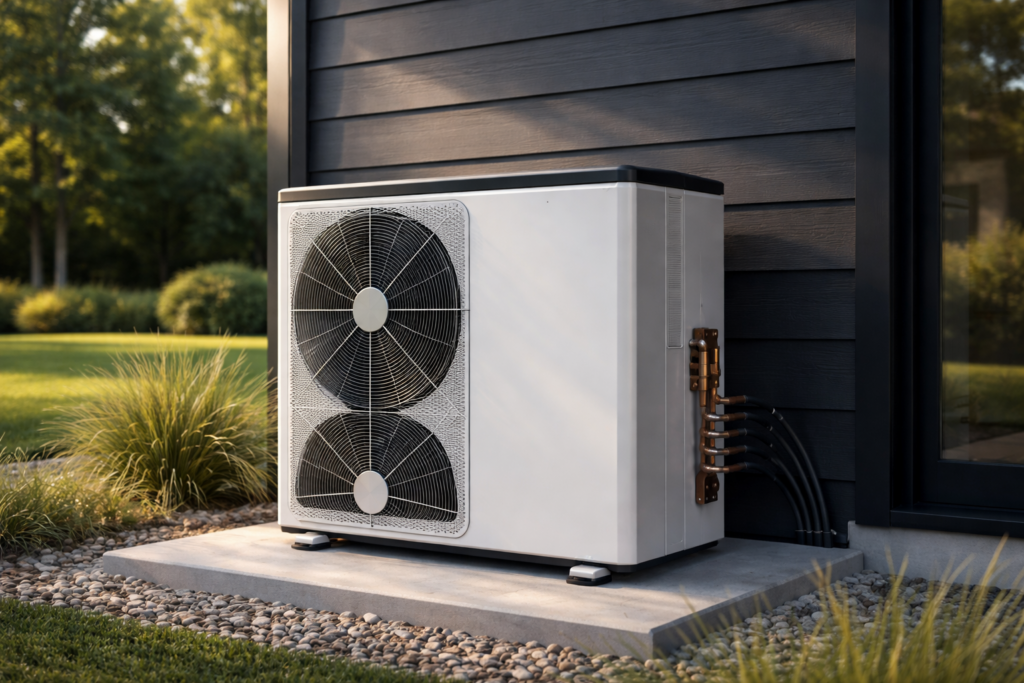
In 2026, we no longer look at old SEER ratings. The industry has shifted to SEER2 (Seasonal Energy Efficiency Ratio 2) and HSPF2 (Heating Seasonal Performance Factor 2). These metrics provide a more realistic look at how a unit performs under actual US duct pressure and temperature fluctuations. To maximize heat pump energy savings, you need to look for units with a SEER2 of at least 18 and an HSPF2 of 9.0 or higher.
The math is clear: transitioning from an old 10 SEER AC and an 80% AFUE gas furnace to a modern 20 SEER2 heat pump can reduce your annual cooling costs by 50% and your heating costs by 30-60%, depending on your local fuel prices. According to data from Energy.gov, air-source heat pumps can reduce electricity use for heating by approximately 50% compared to electric resistance heating like furnaces and baseboard heaters. These heat pump energy savings compound over the 15-year lifespan of the unit, often totaling over $10,000 in avoided utility costs.
The 25C Federal Tax Credit: Fueling Your Savings
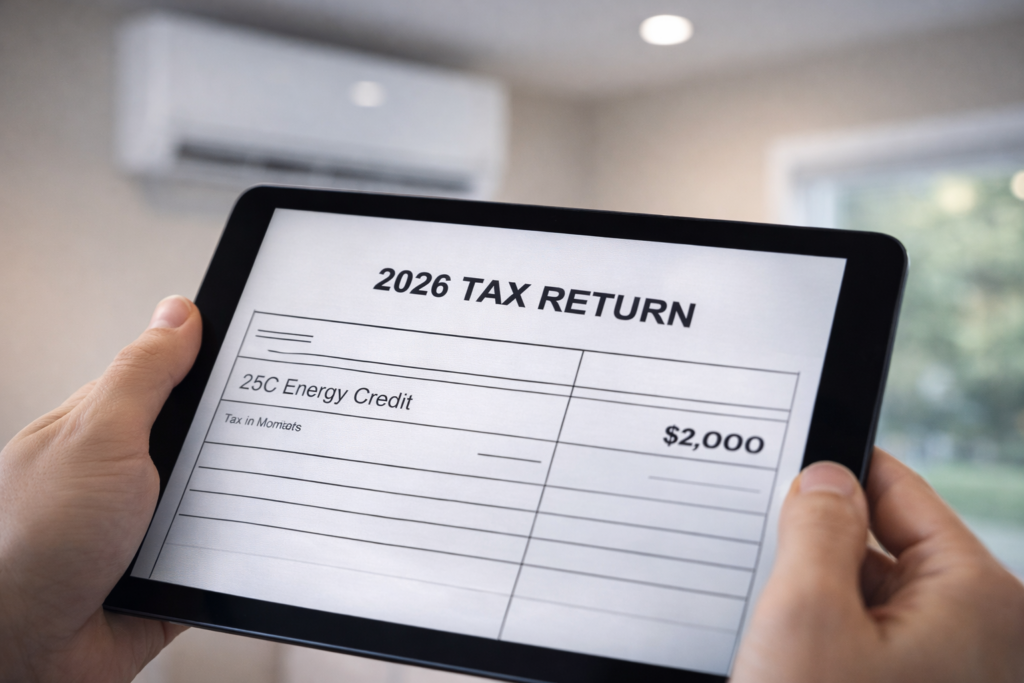
The upfront cost of a high-end heat pump can be daunting, but the 2026 federal landscape has drastically lowered the barrier to entry. Under the Inflation Reduction Act’s 25C tax credit, US homeowners can claim 30% of the project cost, capped at **$2,000 per year** specifically for heat pumps. This isn’t a mere deduction; it is a dollar-for-dollar credit against your federal tax liability.
Beyond federal help, groups like Rewiring America track state-level rebates that can add thousands more to your heat pump energy savings. In many states, low-to-moderate-income households can receive point-of-sale rebates up to $8,000. When you stack these incentives, the net cost of a heat pump often drops below that of a standard, inefficient gas replacement. If you are paying full price for a furnace in 2026, you are essentially donating money to your utility company.
Cold Climate Myths vs. Reality
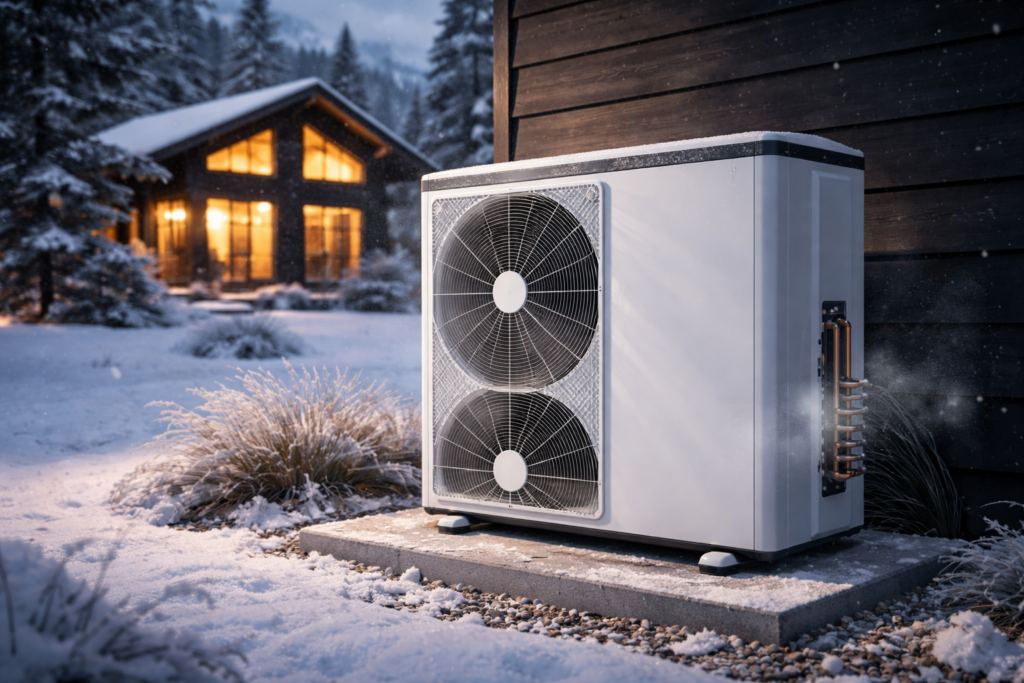
The most persistent lie told by contractors who want to take the “easy way out” is that heat pumps don’t work in the cold. This is outdated nonsense. Modern “Cold Climate” heat pumps (ccASHPs) use vapor-injection technology and variable-speed compressors to maintain high capacity even when temperatures drop to -15°F. In states like Maine and Minnesota, heat pump energy savings are actually highest because the alternative—heating oil or propane—is astronomically expensive.
While efficiency does drop as the mercury falls, a cold-climate unit still operates significantly more efficiently than electric baseboards. If you live in a region with extreme winters, the heat pump energy savings remain robust. You no longer need a “backup” furnace; you just need a properly sized, inverter-driven system designed for your specific climate zone.
Hybrid vs. Full-Electric: Which Slashes the Grid Faster?
A “Hybrid” or “Dual-Fuel” system pairs a heat pump with a gas furnace. The furnace only kicks in during the absolute coldest hours of the year. While this offers a safety net for those skeptical of full electrification, it maintains your connection to the gas grid, meaning you are still paying monthly “service fees” just to have the meter on your house. To achieve the absolute peak of heat pump energy savings, a full-electric system is the winner.
Going full electric allows you to cap your gas line, eliminating those $20-$40 monthly “customer charges” that exist even if you use zero gas. Over a decade, that’s $3,600 in heat pump energy savings just from administrative fees alone. In the “Slash The Grid” playbook, removing a utility bill entirely is the ultimate victory.
Before you size your new unit, perform a diy home energy audit to see if you can downsize the system by fixing air leaks first.
Comparative HVAC Economics
| System Type | Avg. Annual Op. Cost | Carbon Footprint | Est. 10-Year Savings |
|---|---|---|---|
| Standard Gas Furnace | $900 – $1,400 | High (Direct Emissions) | $0 (Baseline) |
| Electric Resistance | $1,800 – $2,500 | Medium/High | -$8,000 (Loss) |
| High-Efficiency Heat Pump | $500 – $850 | Low (Grid Dependent) | $6,000 – $11,000 |
STG Pro Tip: Demand a Manual J Calculation
Most HVAC contractors use “rule of thumb” sizing (e.g., “1 ton per 500 square feet”). This is a recipe for disaster with heat pumps. An oversized unit will short-cycle, destroying your heat pump energy savings and killing the compressor early. Demand a “Manual J Load Calculation.” This technical report accounts for your insulation, window types, and local climate to ensure your unit is sized perfectly. If a contractor won’t do it, find a new contractor.
The Path to Energy Independence
Transitioning to a heat pump isn’t just about swapping a box in your backyard; it’s about decoupling your family’s comfort from volatile fossil fuel markets. The heat pump energy savings available in 2026 are too significant to ignore. By combining federal tax credits, local rebates, and the raw efficiency of the refrigerant cycle, you can turn your home into a high-performance asset that costs pennies to operate compared to your neighbors.
Are you looking at a specific quote for a new system? Share the SEER2/HSPF2 ratings and the price in the comments below for a community “peer review”—let’s make sure you aren’t overpaying for your heat pump energy savings!