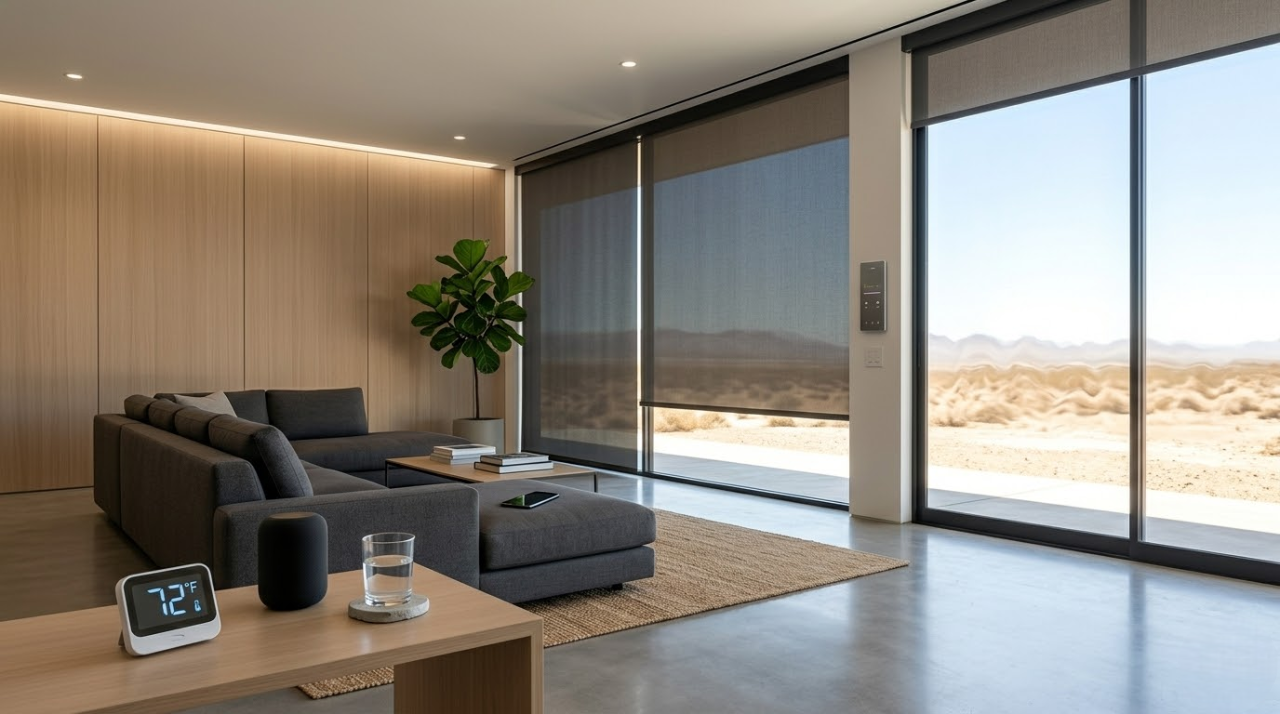
Stop treating your utility bill like an unavoidable tax. In 2026, achieving smart home energy savings is no longer about the novelty of voice-controlled lights; it is a critical defensive strategy against skyrocketing Time-of-Use (TOU) rates in the US. With electricity prices in major markets like California and New York reaching record highs during summer peaks, your home needs an automated “brain” to defend your wallet while you sleep.
The transition from a passive house to an active, grid-aware ecosystem is the fastest way to achieve a measurable return on investment (ROI). By deploying the right hardware, the average American household can reduce waste by 20% to 30% without sacrificing a single degree of comfort. This guide breaks down the high-impact smart home energy savings technologies that actually pay for themselves.
Before automating, ensure your home’s envelope is tight by following our DIY home energy audit guide.
1. Smart Thermostats: The Anchor of Smart Home Energy Savings
Your HVAC system is the undisputed heavyweight champion of energy consumption, often accounting for 48% of your total utility spend. To secure smart home energy savings, you must move beyond the “set it and forget it” mentality of 1990s programmable thermostats. Modern units like the Ecobee Premium or Nest Learning Thermostat utilize onboard machine learning to understand your home’s thermal profile—how fast it heats up and how slowly it cools down.
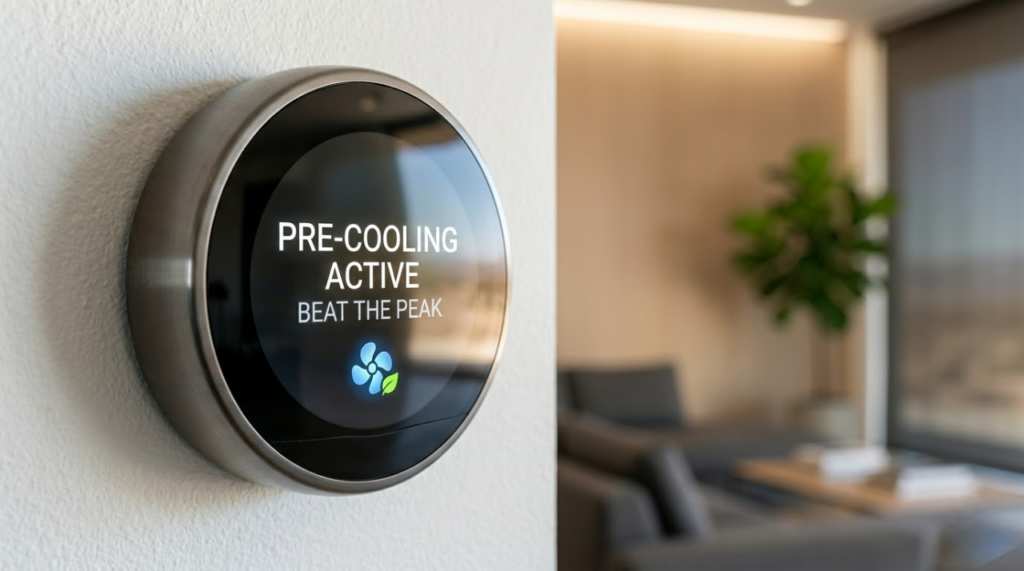
The real “Slash The Grid” power move is Peak Shaving. By integrating with your utility provider’s API, a smart thermostat identifies when TOU rates are about to triple. It then initiates a “pre-cooling” phase during off-peak hours, dropping the internal temperature by 3 degrees while power is cheap. When the peak hits at 4:00 PM, the system shuts down, allowing the house to “drift” through the expensive window. According to Energy.gov, proper thermostat management can save you roughly 10% a year on heating and cooling.
2. Smart Plugs: Automating Smart Home Energy Savings for Phantom Loads
Did you know your “off” appliances are still eating your lunch? “Phantom loads”—the power consumed by devices in standby mode—account for nearly $19 billion in annual waste across the US. To combat this and maximize smart home energy savings, you need a fleet of smart plugs and power strips.
Smart plugs allow you to create “Kill Schedules” for non-essential electronics. Your home office setup (monitors, printers, standing desks) and your media center (game consoles, soundbars, OLED TVs) do not need to draw 40W of idle power at 3:00 AM. By automating these outlets to cut power completely during sleeping hours, you eliminate the “vampire” drain. For high-intent users, look for plugs with built-in energy monitoring to identify which specific device is the biggest offender in your smart home energy savings journey.
3. Energy Monitoring Systems: The Data Behind Smart Home Energy Savings
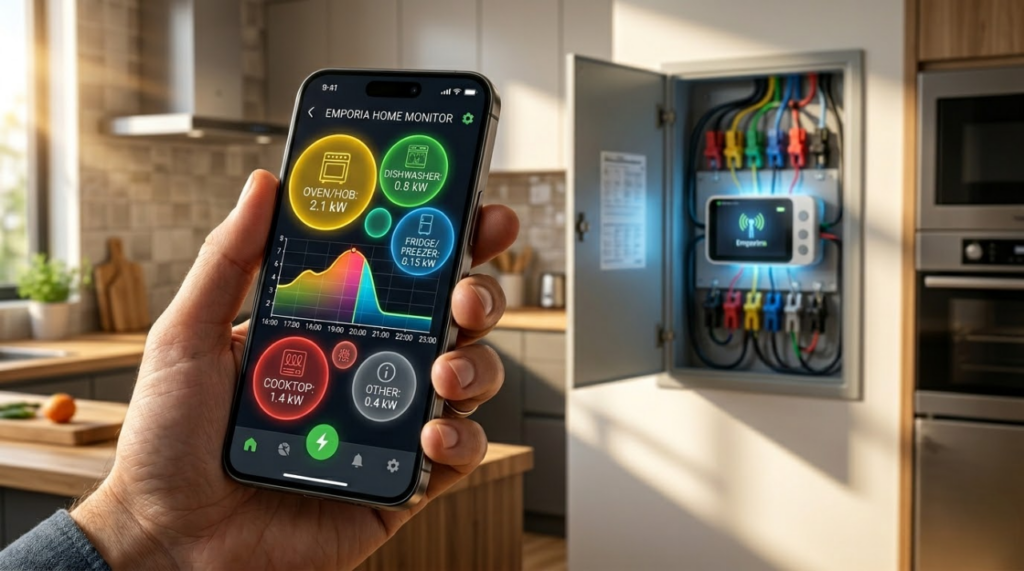
If you don’t know where the leaks are, you can’t plug them. A whole-home energy monitoring system, such as Emporia or Sense, acts as a real-time MRI for your electrical panel. These devices use CT clamps to measure the current flowing through every circuit, providing a second-by-second visualization of your smart home energy savings progress.
These systems use high-frequency sampling to identify the unique “electrical signature” of every appliance in your house. You’ll receive an alert on your phone the moment your 15-year-old refrigerator compressor starts cycling too frequently, signaling a pending failure and massive energy waste. Real-time data visualization is the psychological trigger that changes consumption habits; when you see the “Live Cost” of your clothes dryer in cents-per-minute, you naturally shift usage to off-peak hours.
This real-time data often reveals the overcharging power bill culprits that local utilities hope you never find.
4. Smart Lighting and Occupancy-Based Smart Home Energy Savings
Switching to LED bulbs was the first step; automating them is the second. True smart home energy savings in lighting come from eliminating human error. Occupancy and vacancy sensors are the gold standard here. In high-traffic areas like kitchens and bathrooms, these sensors ensure that lights are physically incapable of being left on in an empty room.
Furthermore, “Daylight Harvesting” is a sophisticated strategy where smart switches dim your interior lights based on the amount of natural sunlight entering the room. By integrating your lighting with a smart home hub (like Home Assistant or Hubitat), you can ensure that exterior “security” lights only activate during astronomical twilight, preventing wasted kWh during those early morning hours when the sun is already up but your timer hasn’t clicked off yet. Lighting may only be 10% of your bill, but it is the easiest 10% to optimize for smart home energy savings.
5. Smart Window Treatments: Thermal Smart Home Energy Savings
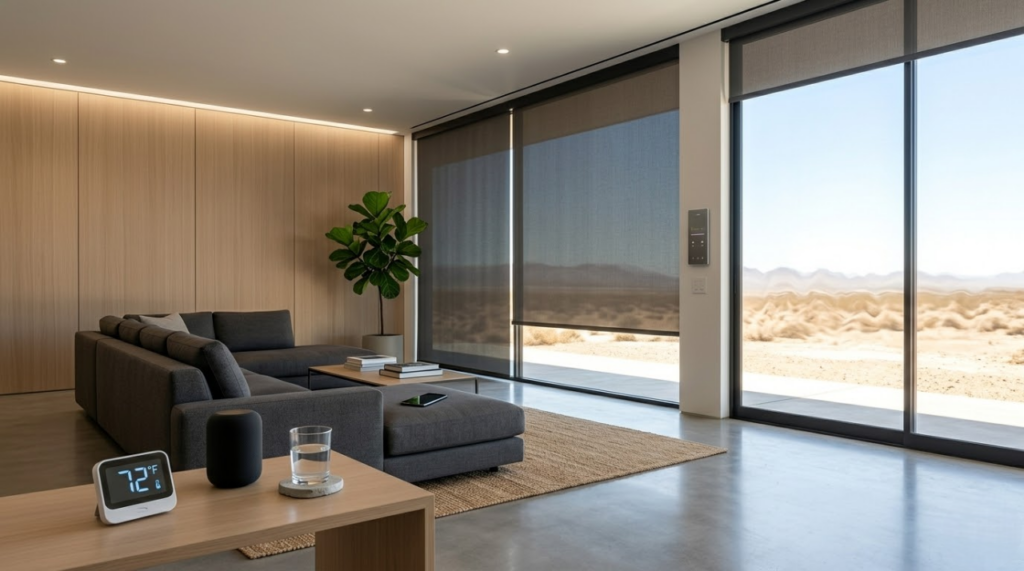
Windows are the primary thermal bridge in your home. In the summer, solar heat gain turns your living room into a greenhouse, forcing the AC to run at 100% capacity. Smart blinds and shades provide a tech-forward solution to this thermodynamic problem, contributing significantly to smart home energy savings.
Using light sensors or simple astronomical scheduling, smart blinds (like those from Lutron or Eve) can automatically close when the sun is directly hitting your south-facing windows. This “Passive Cooling” can reduce the internal temperature by 5-10 degrees, drastically lowering the load on your HVAC system. Conversely, in the winter, the blinds can open to leverage free solar heating. A study on smart window efficiency suggests that automated shading can reduce total cooling energy use by up to 15%.
Calculating the Payback: Smart Home Energy Savings ROI
| Device Type | Average Cost (USD) | Est. Annual Savings | Payback Period |
|---|---|---|---|
| Smart Thermostat | $150 – $250 | $140 – $180 | 12 – 18 Months |
| Smart Plugs (4-pack) | $35 – $50 | $30 – $45 | 12 Months |
| Energy Monitor | $160 – $300 | $100 – $200 | 18 – 24 Months |
| Smart Lighting / Sensors | $50 – $150 | $20 – $50 | 36 Months |
| Smart Blinds (per window) | $200 – $400 | $40 – $70 | 60+ Months |
While the initial outlay for smart home energy savings tech can seem daunting, the cumulative effect is undeniable. As utility rates continue to outpace inflation, the “Payback Period” for these devices is shrinking every year. Investing in efficiency is effectively a tax-free, guaranteed return on your capital.
STG Pro Tip: The Rebate Goldmine
Never pay full price for smart home energy savings hardware. Major US utility providers (including PG&E, ConEd, and Duke Energy) offer massive “Instant Rebates” through their online marketplaces. It is not uncommon to find a $249 Nest Learning Thermostat for $0 or $49 after rebates. These companies would rather pay for your thermostat than build a new $500 million power plant to meet peak demand. Use their money to slash your bill.
Taking Control of Your Grid Presence
The path to smart home energy savings starts with data and ends with automation. Don’t try to upgrade your entire house in a single weekend. Start with the “Heavy Hitter”—the thermostat—and then move to a whole-home energy monitor. Once you have the data, the path to slashing your grid dependence becomes clear. Your home should work for you, not for the utility company’s shareholders.
Which smart upgrade are you considering first to achieve your smart home energy savings goals? Drop a comment below or share your most successful “peak-shaving” tactic with the STG community!